


How Much Bigger Is the Airbus A350-1000 Compared to the A350-900?


The demand for efficient long-haul aircraft has encouraged manufacturers to develop widebody jets that can carry more passengers while maintaining impressive range and fuel efficiency.
Airbus has addressed this demand with its A350 family, a modern aircraft programme designed for long-distance international travel.
The Airbus A350-900 and A350-1000 are the two main passenger versions of the family. Both share a similar design, advanced materials, a modern cabin and Rolls-Royce Trent XWB engines.
However, the A350-1000 is the larger aircraft, with a longer fuselage, more powerful engines and greater passenger capacity.
Although the two aircraft look similar from a distance, their dimensions and performance figures reveal some important differences. So, how much bigger is the A350-1000 compared to the A350-900? Let's compare their size, cabin capacity, engines, range and popularity among airlines.
Airbus A350: A Modern Widebody Aircraft Family
The Airbus A350 is one of Airbus's most important long-haul aircraft programmes. Designed as a clean-sheet widebody aircraft, it combines advanced aerodynamics, lightweight materials and modern engines to improve efficiency on long-distance routes.
The A350-900 completed its first flight on June 14, 2013, and entered commercial service with Qatar Airways in January 2015. The larger A350-1000 followed, entering service with Qatar Airways in February 2018. The two variants allow airlines to select an aircraft based on passenger demand, route length and operating requirements. (Airbus)
One of the programme's main features is its extensive use of advanced materials. According to Airbus, more than 70% of the A350 airframe consists of advanced materials, including 53% composite materials and 14% titanium. These materials help reduce weight and support the aircraft's efficiency.
Both versions are powered by Rolls-Royce Trent XWB engines. However, they use different engine models to match their size and operating requirements. The A350-900 uses the Trent XWB-84, while the A350-1000 uses the more powerful Trent XWB-97.
A350-900 vs A350-1000: Size Comparison
The most obvious difference between the two aircraft is their overall length. The A350-1000 has an extended fuselage, giving airlines additional cabin space for passengers and premium seating.
According to Airbus's published technical data, the A350-900 is 66.8 metres long, while the A350-1000 measures 73.78 metres. This makes the larger variant almost seven metres longer.
Here is a comparison of their main specifications:
Specification | Airbus A350-900 | Airbus A350-1000 |
Overall length | 66.80 m | 73.78 m |
Wingspan | 64.75 m | 64.75 m |
Height | 17.05 m | 17.08 m |
Typical three-class capacity | 300–350 | 350–410 |
Maximum seating capacity | 440 | 480 |
Maximum take-off weight | 283 Tonnes | 322 Tonnes |
Engine | Rolls-Royce Trent XWB-84 | Rolls-Royce Trent XWB-97 |
Published range in Airbus's April 2025 data | 8,500 nautical miles | 8,900 nautical miles |
Source: Airbus A350 Family Facts and Figures, April 2025. Figures can vary with aircraft configuration and specification standard. (Airbus PDF)
The A350-1000 is approximately 10.4% longer than the A350-900. This extra length creates more room for additional seating rows, larger premium cabins and different cabin layouts.
Despite this difference, both aircraft have the same 64.75-metre wingspan. Their heights are also almost identical, with the A350-1000 standing only slightly taller.
This shared design helps airlines operate both variants within the same fleet. While airport compatibility always depends on the aircraft's certification and the airport's facilities, the common dimensions and systems provide operational flexibility.
How Much More Passenger Capacity Does the A350-1000 Offer?

The longer fuselage gives the A350-1000 a clear advantage when it comes to passenger capacity.
Airbus lists a typical three-class seating capacity of approximately 300–350 passengers for the A350-900 and 350–410 passengers for the A350-1000 in its April 2025 family data. The exact number depends on how an airline divides the cabin between economy, premium economy, business and first class.
In maximum-density configurations, Airbus lists capacity for up to 440 passengers on the A350-900 and 480 on the A350-1000. That is a difference of 40 seats. (Airbus A350 cabin information)
However, the larger aircraft does not automatically carry 40 more passengers on every flight. An airline may choose to install fewer seats and provide more space for business class, premium economy or other passenger amenities.
For example, a carrier serving a busy international route with strong economy-class demand may prioritise a higher seat count. Another airline operating premium-heavy routes may use the extra fuselage length to install more business-class suites and spacious premium cabins.
Airbus also states that the A350-1000 offers 40% more area for premium-category seating than the A350-900. This gives airlines more flexibility when designing cabins for routes where premium travel generates a significant share of revenue. (Airbus A350-1000)
For passengers, the experience may therefore differ more by airline configuration than by aircraft variant alone. Both aircraft belong to the same family and share many cabin features, but the seat layout, onboard services and available space depend on the airline.
Why Does the A350-1000 Have More Powerful Engines?
The A350-1000 is longer and has a higher maximum take-off weight, so it needs more thrust to meet its performance requirements.
The A350-900 is powered by two Rolls-Royce Trent XWB-84 engines, each producing approximately 84,000 pounds of take-off thrust. The A350-1000 uses the Trent XWB-97, which produces approximately 97,000 pounds of thrust per engine.
That is an increase of about 13,000 pounds of thrust per engine. Across both engines, the A350-1000 has approximately 26,000 pounds more combined rated take-off thrust.
The difference helps the larger aircraft manage its greater weight and passenger capacity while maintaining the performance needed for long-haul operations. Engine thrust alone, however, does not determine fuel efficiency or overall aircraft performance. Aerodynamics, weight, weather, route length and operating procedures all play a role.
The A350 family also benefits from advanced aerodynamic design. Airbus highlights its wing technology, which adapts during flight to help optimise the wing profile and reduce drag. Combined with its engines and lightweight structure, this design supports efficient long-distance operations.
A350-900 vs A350-1000: Which Aircraft Has the Longer Range?
Both aircraft are designed for long-haul travel, but the A350-1000 generally has a higher published range in Airbus's standard specification data.
Airbus's April 2025 technical document lists the A350-900 with a range of 8,500 nautical miles, equivalent to approximately 15,740 kilometres. The A350-1000 is listed at 8,900 nautical miles, or around 16,480 kilometres.
That gives the A350-1000 a published range advantage of 400 nautical miles, approximately 740 kilometres, in that specification set.
Airbus's current product pages may display different figures as aircraft specifications and standards are updated. For that reason, range comparisons should use figures from the same dated specification document rather than combining numbers from different versions.
It is also important to understand that a manufacturer's maximum range is not a guarantee that an aircraft can operate any route of that distance with a full passenger load and maximum cargo. Actual performance depends on passenger and cargo weight, fuel reserves, winds, weather, airport conditions and other operational requirements.
The A350-900 is also available in a specialised ultra-long-range version. The A350-900ULR is designed for particularly long nonstop flights, demonstrating that the smaller passenger variant can still be the better choice for certain ultra-long-haul missions.
For airlines, the decision is therefore not simply about choosing the aircraft with the greatest range. The right variant must balance route length, passenger demand, cargo revenue and operating costs.
Maximum Take-Off Weight and Cargo Space
The A350-1000's longer fuselage and greater passenger capacity are reflected in its higher maximum take-off weight.
Airbus's April 2025 data lists the A350-900 at a maximum take-off weight of 283 tonnes and the A350-1000 at 322 tonnes. The difference is 39 tonnes.
Maximum take-off weight, or MTOW, is the highest permitted weight for an aircraft at take-off under its approved configuration and operating conditions. It includes the aircraft itself, passengers, baggage, cargo and fuel.
The higher MTOW gives the A350-1000 a different payload and operating profile from the A350-900. However, it does not mean that every A350-1000 flight will carry more cargo or fuel. Airlines must balance these elements according to the needs of each journey.
The larger aircraft also has more usable cargo volume. Airbus's April 2025 document lists approximately 208.2 cubic metres for the A350-1000, compared with around 172.4 cubic metres for the A350-900. This provides additional space for cargo and baggage, although the amount an aircraft can carry depends on weight limits as well as available volume.
For airlines serving routes with high passenger and freight demand, this extra capacity can be valuable. The A350-900, meanwhile, may be a better fit where demand does not justify the larger aircraft.
Which A350 Variant Is More Popular With Airlines?
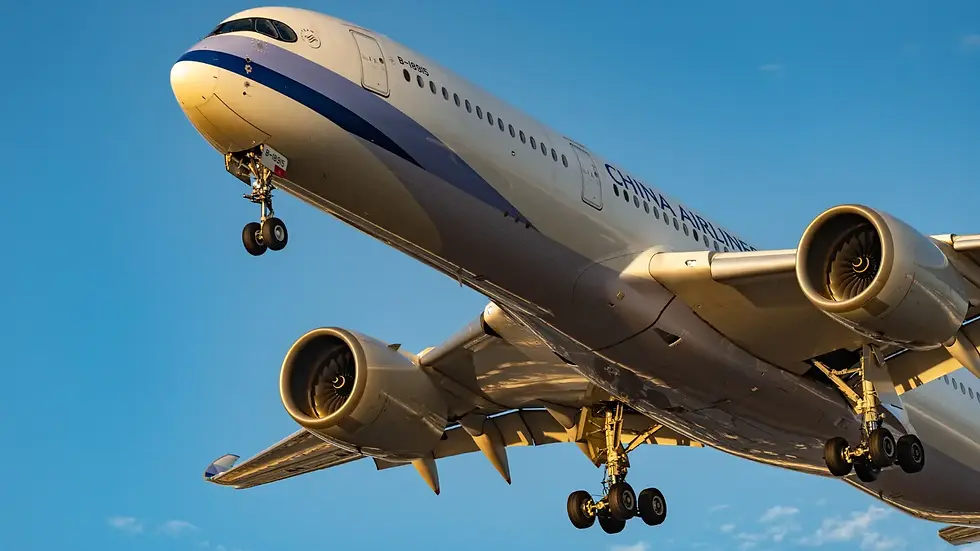
The A350-900 has historically been the more widely ordered and delivered passenger variant. Its combination of long range, passenger capacity and operating flexibility makes it suitable for a broad range of international routes.
The A350-1000 is aimed at airlines that need additional capacity on busy long-haul services. It can accommodate more passengers and cargo while retaining the long-range capabilities expected from the A350 family.
Airbus's official orders and deliveries page reported 1,624 total orders and 737 deliveries for the entire A350 family at the end of September 2026. These totals cover the family, rather than the A350-900 and A350-1000 separately, and include the A350F freighter programme. (Airbus Orders and Deliveries)
These overall figures show the scale of the programme, but they should not be used to claim an exact current order or delivery count for either passenger variant. For an accurate variant-by-variant comparison, the individual aircraft breakdown from Airbus's latest report is needed.
The choice between the two versions ultimately depends on each airline's network. A carrier opening a new long-distance route may prefer the A350-900 because its capacity better matches expected demand. An airline operating a heavily booked route may choose the A350-1000 to accommodate more passengers per departure.
Could Airbus Build an Even Larger A350?
The possibility of a stretched A350 has attracted attention from the aviation industry. A potential variant is often referred to as the A350-2000, a name used in discussions about a future aircraft rather than a confirmed production model.
A larger A350 could appeal to airlines that want more capacity without moving to a different aircraft family. It could also offer Airbus another option for competing in the large widebody market.
However, a longer aircraft would bring engineering and commercial challenges. Airbus would need to consider structural weight, engine performance, airport compatibility, passenger demand and the effect on operating costs. Simply extending the fuselage would not be enough to guarantee a commercially successful aircraft.
As of this article's publication, the A350-2000 should be treated as a potential future concept rather than an aircraft with confirmed specifications, orders or an entry-into-service date. Any proposed passenger capacity, engine choice or range would remain speculative until Airbus formally announces the programme.
For now, the A350-900 and A350-1000 serve different needs within the existing family: one offers flexibility across a wide range of routes, while the other provides additional capacity for demanding long-haul markets.
Comments